



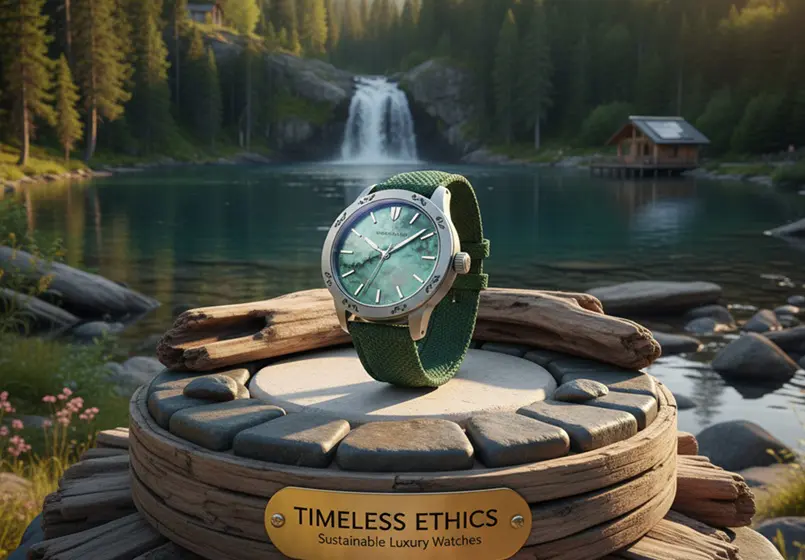
It is interesting to note that for centuries, luxury watches have been connected with a few specific things: exclusivity, precision, and lasting worth.
Nevertheless, in a world that is becoming more concerned with the environment, the old story of luxury— often linked to taking resources from the earth and being exclusive— is going through a big change.
Building an Environmental Footprint
Like numerous other sectors, the watch industry is pondering how to lessen its environmental footprint.
The total ecological cost of luxury watches— from the mining of precious metals and gems to their manufacture (a process often requiring high-energy inputs) plus concerns around ethically sourcing materials— can be significant.
However, with shoppers increasingly wanting honesty and accountability, there is now a fresh movement towards ‘sustainable luxury’ that is changing both the way these goods are made as well as how we see them.
This goes beyond being a simple “eco-friendly” marketing tactic; it represents an industry-wide movement towards circular business practices, responsible sourcing, and the development of new materials– all of which will shape the future of high-end watchmaking!
1. From Conflict Gold to Certified Sources: Ethical Material Sourcing
Every luxury watch begins its journey with the basic materials.
Gold, platinum, diamonds– and sometimes steel– are taken from deep underground or from open pits where the work and environmental record can be poor.
The biggest single change in this area is a shift to having all such things brought in under strict ethical codes that have been certified.
a. Recycled Precious Metals
Lots of brands are now prioritizing recycled materials such as gold, platinum, and steel. Take Panerai– to give an example– they have made a commitment: from now on, most of the steel (eSteel™) used in watches like the Submersible will be recycled.
Chopard? They blew the competition away when they announced that every last gram of gold used in all of their watches and jewelry comes from fair-mined sources or suppliers with Responsible Jewellery Council RJC certification– there isn’t any other way for it to be described!
b. Traceable Diamonds and Gems
The diamond industry was forever changed by the controversy surrounding blood diamonds. Today major players are looking at new technology to help them track the gems from the moment they are pulled out of the ground.
One technique being explored is blockchain– it would create a digital ledger detailing each diamond’s journey providing proof that it is conflict-free and ethically sourced.
c. Innovative Alternative Materials
Watchmakers are also looking outside traditional metals to new sustainable materials. Take Breitling, for example: They use ECONYL® yarn– which is made from recycled fishing nets– for their NATO straps.
Or consider brands that explore plant-based leathers and recycled plastic composites for watch parts!
2. Energy Efficiency & Circular Production: The Factory of the Future
Crafting a luxury watch is no easy feat; it requires a lot of energy. Each step— from CNC machining to polishing and putting everything together— uses power.
Making watchmaking sustainable means looking past the raw materials alone: it’s also about how efficiently factories operate as they make the timepieces.
- Renewable Energy Sources: More watch manufacturers are now using a lot of energy from solar panels, geothermal heat, wind turbines, and other sources. The factory at IWC Schaffhausen is a good example; it runs on carbon-free power made up almost entirely of renewable energy.
- Waste Reduction and Recycling: It’s no longer unusual for factories to reduce waste, recycle metal shavings, and save water. After all, the idea is to create a ‘circular economy’ where resources aren’t wasted but used again and again.
- Longevity as Sustainability: The longevity of luxury watches is one sustainable aspect. Unlike fast fashion, a high-quality mechanical watch is built to endure generations. Manufacturers recognize this, offering prolonged warranties and guaranteeing that components will be available for several years– encouraging repairs instead of replacements.
3. Packaging: Less is More, Better is Best
Luxury buyers love a great unboxing because it feels special, but huge, fancy boxes often just end up as waste.
Instead, sustainable packaging in the luxury world is becoming something different– things that are small, easy to recycle, or made from biomaterials.
- Reduced Footprint: Old, heavy, multi-layered package designs are being replaced by smaller, lighter boxes crafted from recycled paper or wood obtained in a sustainable manner.
- Innovative Materials: Rather than traditional materials, some brands are turning to bamboo, mycelium (the root structure of mushrooms), or plastics recovered from the sea for their packaging. Oris is a great example– its watch boxes now come from recycled PET.
- Multi-functional Packaging: Certain companies create packaging that consumers can reuse for a variety of purposes, such as making it into a travel case or display stand. This approach increases the usefulness of the packaging beyond just opening the box.
4. Transparency and Certification: Building Trust
Consumers have grown tired of empty “green” claims— they want evidence. As a result, there’s now more attention on being transparent and getting verified by independent organizations.
- B Corp Certification: This tough certification checks out how businesses behave socially and environmentally. It’s cool to see big names like Cartier (part of Richemont) going for it. Trying to become a B Corp shows they want to do more than just sell sustainable things; they really care about the planet and its people too.
- ESG Reporting: Environmental, Social– and Governance (ESG) reports are now common. They give stakeholders the ability to see how well a company is doing in terms of sustainability using easy-to-understand measurements.
- Product Passports: Picture this: a QR code on your watch providing data about where the materials came from, how much power was used during manufacturing, and the overall environmental effects throughout its lifecycle. This kind of detailed openness is becoming more of a reality soon.
The Future of Timelessness
Sustainable luxury is not a compromise in quality or beauty; rather it is an evolution. It entails creating items that, while being attractive and useful, show respect towards our planet and its inhabitants.
Eco-conscious design is more than just a fashionable concept– it represents the responsible, innovative core of luxury watchmaking today, as anyone can see from materials such as recycled gold with their ethical appeal or factories that require very little energy to run.
As the industry continues to innovate, we can expect timepieces that tell more than just time; they tell a story of integrity, ingenuity, and a commitment to a more sustainable future!
